
The Modern PR Playbook: Building Trust and Managing Reputation

By ONE INTEGRATED GROUP
As a CEO or CMO, you operate in an environment where brand valuation is increasingly tied to public perception and trust. Yet, your Corporate Communications team constantly battles the 24/7 news cycle and the instant virality of social media. Consequently, you are forced to ask: Is our approach to public relations truly building long-term equity, or are we just reacting to the latest headline? The old model of simply issuing press releases has failed; it is too slow and too passive for the digital age.
The solution is a comprehensive, data-driven framework that integrates PR into the core business strategy. This Modern PR Playbook moves beyond media relations to focus on proactive Reputation Management Strategy. This detailed guide outlines the essential steps for Building Public Trust and achieving true brand resilience. One Group Integrated Ltd. establishes itself as the authority in strategic PR and crisis preparedness, helping your executive team transition to a proactive, integrated system.
1. The Strategic Shift: Redefining PR for the Digital Age

Public Relations is no longer a peripheral function. It is a critical revenue protector and value driver. The Modern PR Playbook requires a fundamental shift in executive mindset.
The Integrated PR and Marketing Mandate
In 2026, PR cannot operate in isolation. It must be seamlessly connected with marketing, legal, and customer service. This Integrated PR and Marketing approach ensures every communication reinforces the same brand promise.
Message Consistency: All external communications—from an investor deck to a social media ad—must use the same core positioning statement. Discrepancies create confusion and erode trust.
Data Sharing: PR teams must share social listening data and sentiment analysis with marketing. Conversely, marketing must share conversion data with PR to prove the revenue impact of positive media coverage.
Unified Goals: The PR goal should not be “X number of placements.” It should be “increase brand sentiment by Y% among the target investor base,” directly supporting a corporate objective.
Building Public Trust Through Authenticity
Trust is the single most valuable asset a brand possesses. In an age of skepticism, Building Public Trust requires more than polished statements; it demands verifiable action.
Value-Driven Communications: Focus your storytelling on how your company solves societal problems or creates value for the community, not just how great your product is. This builds emotional resonance.
Executive Visibility: Position senior leaders as authentic thought leaders, not just figureheads. Utilize platforms like LinkedIn and high-authority industry blogs for genuine, unscripted commentary on industry trends.
Proof Over Promise: Prioritize earned media coverage (unbiased third-party validation) over paid placements. Earned trust is exponentially more valuable than purchased visibility.
2. The Proactive Defense: Reputation Management Strategy

A truly resilient brand maintains a deep reservoir of positive equity. This buffer protects the brand when inevitable negative events occur. Reputation Management Strategy is continuous, not episodic.
Mastering Digital Reputation Monitoring
Content Strategy as a Proactive PR Tool
Content is the fuel for your proactive PR efforts. Use your owned channels to control the narrative and build authority.
The “Newsroom” Hub: Create a comprehensive, easily searchable online newsroom. It should house executive bios, high-resolution brand assets, and a historical archive of all press releases and company statements.
Transparency Reports: Publish regular reports on corporate responsibility, sustainability goals, or data usage practices. Proactive transparency anticipates and mitigates potential negative questions.
Internal Communications: Never let your employees be surprised by external news. Use internal communications to provide employees with context, talking points, and reassurance before news breaks externally. They are your most credible advocates.
3. The Crisis Playbook: Corporate Communications and Preparedness

The most critical test of any Reputation Management Strategy is a crisis. Corporate Communications during a crisis requires precision, speed, and genuine empathy.
Corporate Crisis Preparedness: The Three-Stage Response
You must have a systematic plan with pre-approved messaging and a designated command structure. This minimizes the risk of delayed or inconsistent responses.
Stage 1: The Command Structure and Verification
Activate the Crisis Response Team (CRT): A small, pre-selected team (CEO/CMO, Legal, Head of Comms, Technical Expert) assembles immediately.
Verify Facts: Prioritize verifying the core facts of the crisis. Do not comment, apologize, or take blame for unverified information.
Issue the Holding Statement: Within minutes of detection, issue a pre-approved holding statement acknowledging the situation and stating that a full response is forthcoming. This buys time and prevents speculation.
Stage 2: Strategy and Messaging
Determine the Response Type: Decide whether the situation warrants an Accountability response (taking blame), an Empathy response (expressing concern without taking blame), or a Rebuttal response (when the information is factually incorrect).
Draft the Core Message: The core message must be simple, honest, and focused on the impact on stakeholders (customers, employees, investors), not the company’s financial loss.
Appoint the Single Spokesperson: Only one designated individual should speak publicly. This ensures the message remains consistent and controlled.
Stage 3: Channel Execution and Control
Respond Natively: Respond on the platform where the crisis originated (e.g., a statement on X/Twitter if the crisis is trending there).
Shift Traffic to Owned Channels: Immediately direct the audience to a controlled channel (e.g., a dedicated “Statement” landing page on your website) for official updates. This limits the crisis to your domain and pushes new traffic to your narrative.
Sustained Engagement: Do not go silent. Provide regular, factual updates even if there is no new information. Silence suggests a lack of control or transparency.
4. Measuring and Scaling: Proving the Value of PR
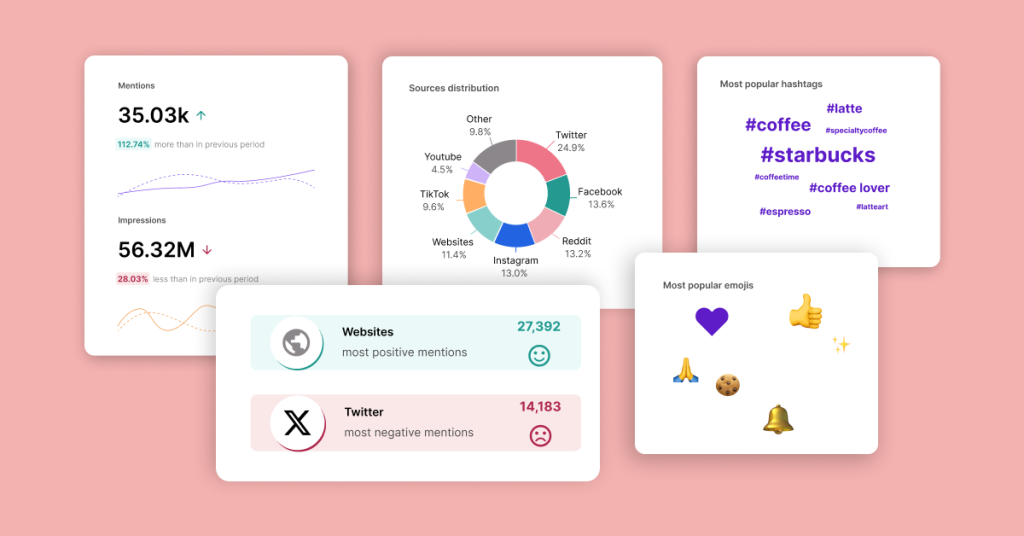
The Modern PR Playbook must be governed by data. Integrated PR and Marketing allows you to finally measure the true financial impact of reputation.
Metrics for Building Public Trust and ROI
Move beyond vanity metrics like “Impressions” and focus on outcomes that matter to the executive team.
Quality of Coverage: Prioritize sentiment (positive/neutral/negative) and Domain Authority (DA) of the publications. A placement in a high-DA, positive-sentiment publication is worth 10 low-quality links.
Web Traffic and Conversion: Track traffic spikes and conversion rates (form fills, downloads) originating from earned media placements. This proves the direct revenue impact of PR.
Share of Voice (SOV): Measure your brand’s presence in media coverage relative to your competitors. A growing SOV is a leading indicator of increasing market dominance and recognition.
Reputation Score (Long-Term): Establish an internal index that measures key factors (Brand Awareness, Trustworthiness, Customer Satisfaction) and track its movement over time. This proves the long-term success of your Reputation Management Strategy.
The Continuous Improvement Cycle
The final step is to use the data collected to refine your Modern PR Playbook and optimize future efforts.
Post-Crisis Audit: After a crisis, conduct an exhaustive audit of what worked and what failed in the Corporate Communications response. Update the Crisis Playbook immediately.
Investor Relations Integration: Ensure your positive PR is specifically targeted toward investor-facing publications and channels. Strong reputation directly translates into higher stock valuation and easier capital raising.
Media Relationship Health: Maintain proactive, honest, and frequent communication with key journalists. Treat them as essential stakeholders, not adversaries. Strong relationships ensure your story is heard fairly and accurately during a crisis.
Make PR Your Strategic Asset
The reactive era of PR is over. Building Public Trust and securing long-term brand equity requires a disciplined, data-driven Modern PR Playbook. By adopting an Integrated PR and Marketing approach and establishing rigorous Corporate Crisis Preparedness, your executive team can replace unpredictability with a scalable, reliable Reputation Management Strategy.
ONEGROUPJA specializes in creating the custom crisis architecture, proactive content strategies, and media relationship management required to protect and elevate your brand in the 24/7 digital environment. We ensure your reputation is managed with the precision and professionalism it deserves.
Take Action Now: Do not wait for the next headline to expose your vulnerabilities. Reach out for a specialized Reputation Strategy Audit.
Email us today to schedule your executive strategy session: info@onegroupja.com