
Measuring ROI of Corporate Events: Key Metrics That Matter

By ONE INTEGRATED GROUP
As a CEO or CFO, you recognize a major corporate event—be it a high-profile product launch, a client appreciation summit, or an investor conference—as a significant investment. Yet, how often is this investment justified beyond anecdotal praise? Too often, events are evaluated on vanity metrics like “great attendance” or “positive buzz,” failing to connect the spend to measurable profitability. This lack of accountability creates risk and makes future funding decisions impossible.
The modern mandate is clear: Every dollar spent on an event must deliver a demonstrable Event Investment Return. Successfully justifying this expense requires a disciplined, data-driven approach to Event Management. You need to move beyond simple cost tracking and adopt a strategic framework that calculates true ROI. This guide is designed for the executive demanding accountability. It provides the financial blueprint to quantify your event’s value, prove profitability, and secure future investment in your brand’s most impactful live experiences.
Phase I: Redefining Value and Measuring ROI of Corporate Events
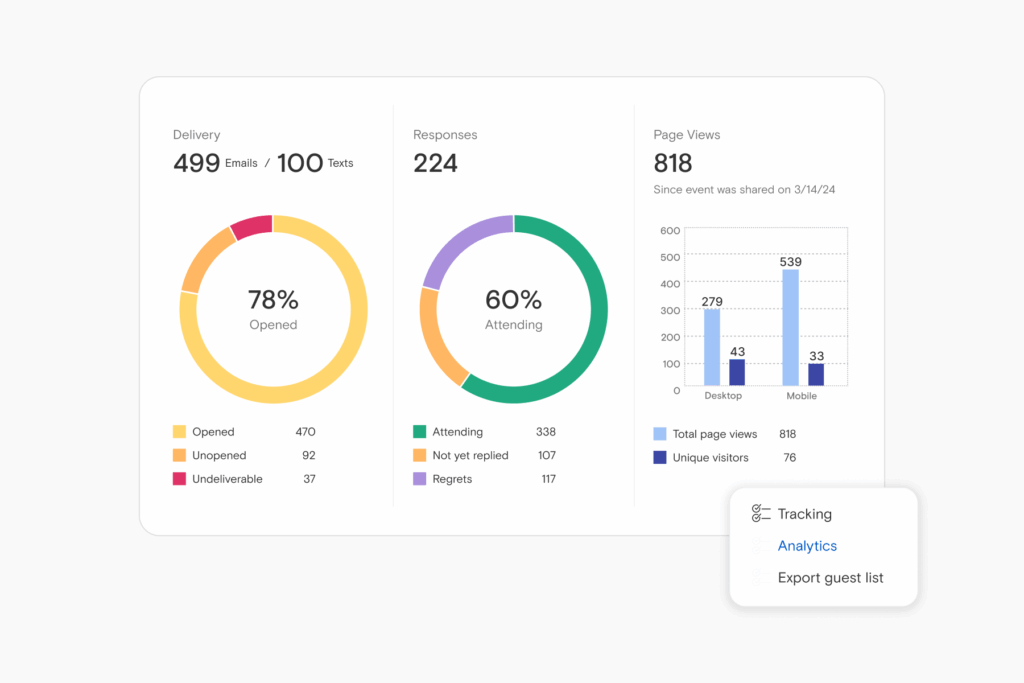
For events, ROI is a complex calculation. It requires assigning a monetary value to intangible outcomes like lead quality, brand perception, and client loyalty.
The Formula for Financial Accountability
The core calculation for Event Investment Return remains simple, but its variables must be rigorously defined and quantified:
ROI = (TOTAL EVENT REVENUE – TOTAL EVENT COST / TOTAL EVENT COST) X 100
The challenge lies in accurately determining the Total Event Revenue—the direct and indirect financial gain attributable to the event.
Revenue Component | Description and Source |
Direct Revenue | Ticket sales, exhibition booth fees, and confirmed sponsorship value payments. |
Sales Revenue | Immediate sales or contracts signed at the event or attributed to event attendees within 90 days. |
Lead Value | The projected lifetime value (LTV) of new qualified leads captured at the event. |
Retention Value | The calculated cost savings from retaining existing high-value clients who attended the event. |
Moving Beyond Vanity Metrics
You must ruthlessly eliminate metrics that look good but provide no financial context. True Event Investment Return is not based on feelings.
Vanity Metric (Avoid) | Financial Metric (Track Instead) |
Total Event Attendance | Cost Per Attendee (CPA): Total cost / Total attendees. |
Social Media Mentions | Media Value Equivalent (MVE): The cost to purchase the same level of reach via traditional advertising. |
Positive Feedback Surveys | Net Promoter Score (NPS): Measures loyalty and advocacy, directly correlating to retention value. |
Number of Booth Visits | Cost Per Qualified Lead (CPQL): Total cost / Number of high-quality leads captured. |
Phase II: Key Event Metrics for Executive-Level Evaluation

To appeal directly to the CFO, your reporting must segment performance into three quantifiable areas: Financial Efficiency, Marketing Effectiveness, and Brand Impact.
Financial Efficiency and Cost Metrics
These metrics prove that the event was managed with disciplined financial control and effective resource allocation.
Cost Per Lead (CPL): This is the most crucial metric. You must track the total event cost and divide it by the number of sales-qualified leads generated. Comparing the event CPL to your digital marketing benchmarks proves the superior value of face-to-face engagement.
Contingency Variance: Track the percentage of your contingency budget that was actually spent. A low variance indicates exceptional budget forecasting and risk management.
Budget Alignment: What percentage of the total spend was allocated to activities directly tied to the primary goal? (e.g., Lead Capture Technology, Keynote Speaker fees). High alignment proves strategic focus.
Sponsorship Value Metrics and Revenue Generation
Sponsorships are often the single largest variable in event revenue. Therefore, proving sponsorship value is essential for future funding.
Sponsor ROI (SROI): Track the value delivered to your sponsors versus their investment. Did they meet their goals for leads, brand exposure, or product demos? A high SROI secures multi-year partnerships.
Sponsorship Renewal Rate: The percentage of current sponsors who commit to the next event. This is the ultimate proof that your event is a valuable asset, not a one-off expense.
Media Value Equivalent (MVE): Calculate the dollar value of earned media generated by the event (news stories, reviews, high-profile mentions). This MVE is direct revenue offsetting your marketing spend.
Post-Event Conversion Metrics
The true test of Event Investment Return is the performance of the leads and attendees in the 3 to 12 months following the event.
Lead Conversion Velocity: How quickly did event leads move from MQL (Marketing Qualified Lead) to SQL (Sales Qualified Lead) compared to non-event leads? Faster velocity proves the superior quality of the event channel.
Customer Retention/Upsell Rate: For current clients who attended, track their retention rate and any upsell or cross-sell revenue generated in the six months following the event. This quantifies the value of face time.
Phase III: The Event Planning Guide to Data Integration
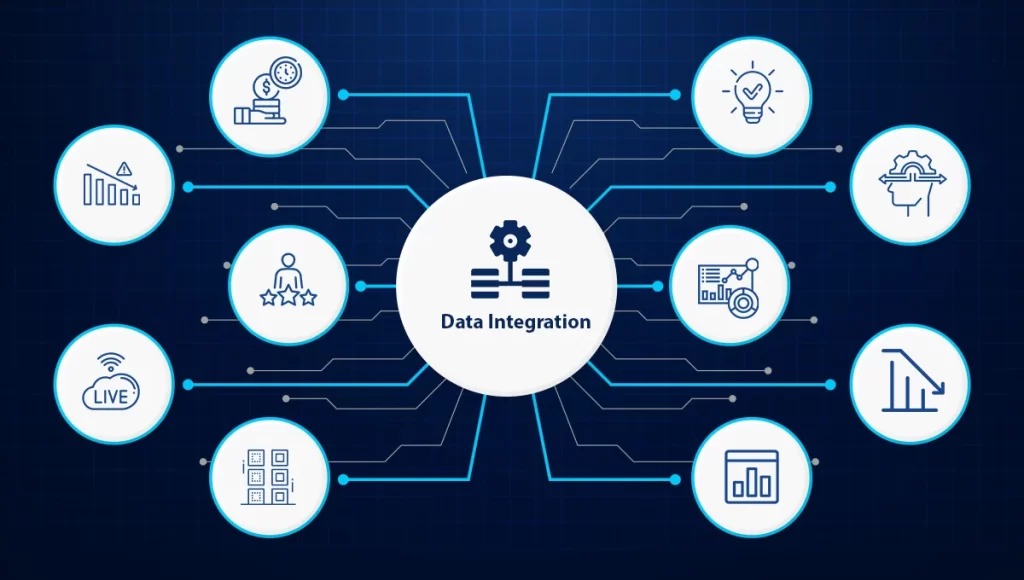
You cannot measure what you cannot track. Achieving reliable Measuring ROI of Corporate Events requires integrating event platforms with your existing marketing and sales infrastructure.
Technology Integration: Bridging the Digital-Physical Gap
Successful event ROI reporting relies entirely on seamless data flow between the physical event and your CRM (Customer Relationship Management) system.
Lead Capture Discipline: Use badge scanning or dedicated lead capture apps that immediately integrate attendee data into your CRM. Action: Every interaction (booth visit, session attended) must be logged against the attendee’s profile.
Custom Attribution Tags: Use specific UTM parameters on all registration links. This ensures that every website visit, lead, and sale originating from the event is accurately tagged in your analytics.
Post-Event Nurturing Automation: Leads must immediately drop into an automated follow-up email sequence tailored to the sessions they attended. This maximizes lead conversion while the event is still top-of-mind.
The Event Audit and Feedback Loop
The Mandate for Event Investment Return
Corporate Event Management is a strategic investment, not a speculative expense. Your mandate is to move beyond subjective feelings and adopt a precise, data-driven approach to accountability. By leveraging Key Event Metrics and integrating your data infrastructure, you can confidently calculate true Event Investment Return. This rigor validates your team’s efforts, secures necessary funding, and ensures your events become powerful, predictable engines for business growth. The time for guesswork is over.
Ready to transition from guessing to guaranteeing event success with a verifiable Event Investment Return?
Contact ONEGROUPJA today for a personalized consultation on Measuring ROI of Corporate Events and strategic Event Management.
Email us at: info@onegroupja.com for further assistance, strategy discussions, or inquiries.